
Thriving game design studio culture does not happen by accident. It must be built, nurtured, and valued like any other studio product.
This is even more critical when the majority of your team can't share a commute, a coffee, or a spontaneous hallway conversation because they live three time zones away. At Level Ex, I knew that connection had to be designed, not assumed.
So I treated our studio culture the same way I treat every game: I gave it clear goals, satisfying feedback loops, and made participation genuinely irresistible.
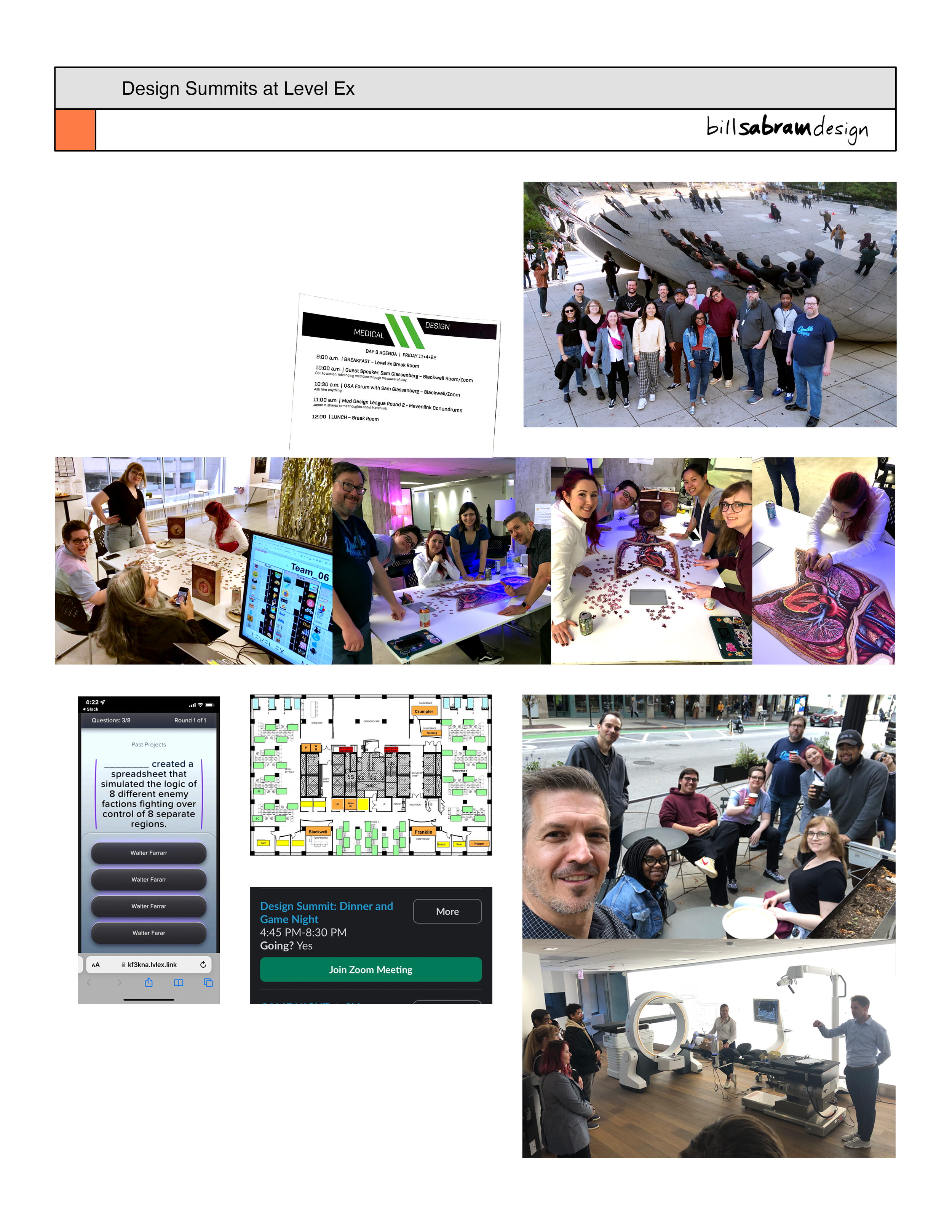
The Med Design Summits weren't just team meetings with a nicer backdrop. They were crafted experiences with field trips, breakout sessions, hands-on play, and the kind of late-afternoon Coffee Walk that resets a room and reminds people why they showed up. I designed them so that contributing felt rewarding, remote-only attendees felt visible, and the studio's identity generated pride that people wanted to internalize.
Good game design teaches us that people don't resist participation - - - they resist bad design. Give people the right mechanics, the right feedback, and a goal worth chasing, and engagement follows naturally. The same is true for culture.
If you have to mandate your culture, you've already lost. The best cultures — like the best games — are ones people choose to return to every single day.